
The Definitive Phantasmal Flames Player's Guide | Beginner Edition

PART I — INTRODUCTION & SET CONTEXT
1A. Beginner Introduction: What Is Phantasmal Flames?
If you're new to the Pokémon Trading Card Game, Phantasmal Flames can look exciting—and a little confusing. This set is packed with Pokémon you recognize, striking artwork, and powerful-looking attacks. Still, it plays very differently from most beginner-friendly products.
Here's what you need to know before building your first deck with it.
A Pokémon-Heavy, Evolution-Focused Set
Phantasmal Flames is a Pokémon-first expansion. Compared to many modern sets, it includes:
A vast number of Pokémon cards
Relatively few Trainer cards
An emphasis on Evolution lines, including multiple Stage 2 Pokémon
That design encourages decks that:
Spend early turns setting up Evolutions
Win games through strong mid- to late-game attackers
Reward planning and sequencing over speed
For players who enjoy watching a strategy come together over several turns, this is appealing—but it also raises the difficulty level.
Why This Isn't a Plug-and-Play Beginner Set
Many beginner-friendly Pokémon TCG sets let you open packs, shuffle together a few cards, and start playing right away. Phantasmal Flames is not built for that experience.
Common beginner challenges with this set include:
Too many Evolutions, not enough Basics
Inconsistent draws due to a lack of built-in search and draw Trainers
Pokémon that look powerful but are hard to set up without support
On its own, the set doesn't give new players all the tools they need to make decks run smoothly. That doesn't make it bad—it just means it expects you to combine it with other cards.
What Kinds of Decks Can You Build from Phantasmal Flames?
Even for beginners, the set supports a few clear deck styles:
Evolution-Based Grass Decks
Focused on building strong Stage 1 or Stage 2 Pokémon that can take over the game once set up.
Big Pokémon ex Decks
Centered around high-HP Pokémon ex that can survive multiple hits and trade Prizes efficiently.
Simple Two-Attacker Decks
Using one main attacker and one backup option, keeping decision-making manageable while learning.
These decks teach valuable fundamentals like:
Evolution timing
Bench management
Planning your win condition ahead of time
When (and Why) to Combine It with Other Sets
To get the most out of Phantasmal Flames, beginners should combine its Pokémon with Trainers from other expansions or products.
You'll almost always want to add:
Reliable draw Supporters
Search Items to find Pokémon and Evolutions
Switching cards to manage heavy retreat costs
A good rule of thumb:
Use Phantasmal Flames for your Pokémon core, and other sets for consistency.
This approach turns Phantasmal Flames from a frustrating learning experience into an excellent teaching set—one that helps new players understand how real, functional Pokémon TCG decks are built.
In the next section, we'll break down how this set actually plays turn by turn, and what beginners should expect when piloting an evolution-focused deck for the first time.
PART II — CORE MECHANICS & SET IDENTITY
2A. Beginner: Understanding How Phantasmal Flames Plays
If Phantasmal Flames feels slower than other Pokémon TCG sets, that's not your imagination. The entire expansion is built around Evolution-based gameplay, which asks you to plan ahead instead of attacking as fast as possible. Understanding how this pace works is the key to enjoying—and winning with—the set.
What Evolution Decks Are (and Why They're Slower)
An Evolution deck is one where your strongest Pokémon don't start in play. Instead, they evolve over multiple turns:
Basic Pokémon → Stage 1 → Stage 2
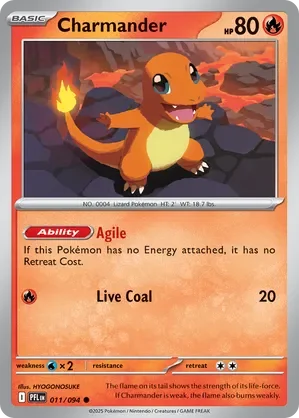
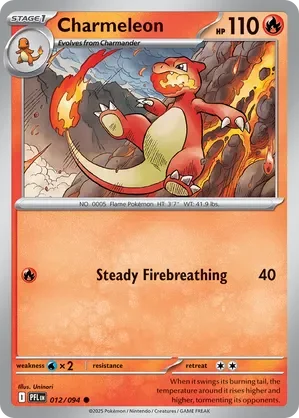
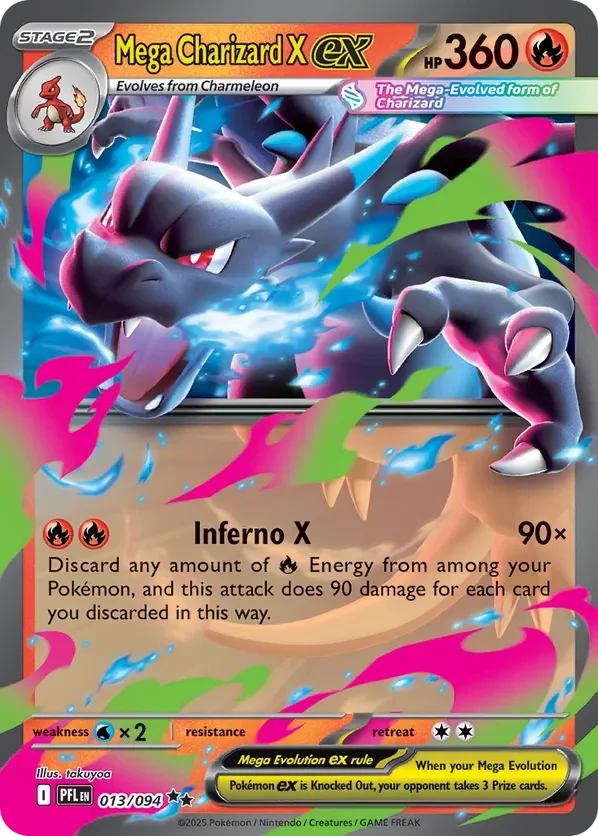
Each step usually takes:
At least one turn
The right card in your hand
Bench space to grow the line
This means Evolution decks:
Spend early turns preparing, not attacking
Are more vulnerable at the start of the game
Become much stronger once fully set up
In Phantasmal Flames, many of the best Pokémon are Evolutions, so patience is built into the set's identity.
What "Setup Turns" Mean
Setup turns are the early turns where your goal is not to take knockouts.
Instead, you're trying to:
Get Basic Pokémon onto your Bench
Start Evolution lines
Attach Energy for future attacks
Protect your board from falling apart
For beginners, this can feel uncomfortable—especially if your opponent is already attacking. But with Phantasmal Flames, rushing attacks often lead to losing later.
A good rule of thumb:
If your board looks stronger on turn 4 than turn 2, you're doing it right.
How HP, Damage, and Energy Costs Interact
One reason Phantasmal Flames supports slower play is how its numbers line up:
Many Pokémon have high HP, especially evolved Pokémon and Pokémon ex
Attack damage often takes multiple turns to secure knockouts
Energy costs are designed to be paid over time, not instantly
This creates longer battles where:
Positioning matters more than speed
Attaching Energy every turn is critical
Surviving an extra hit can win the game
Instead of racing to the first knockout, Phantasmal Flames rewards players who build Pokémon that stay in play and keep attacking.
Why Patience Matters with This Set
The biggest beginner mistake with Phantasmal Flames is trying to play it like a fast deck.
Impatience leads to:
Attacking before you're ready
Evolving the wrong Pokémon
Running out of Energy or options late-game
Successful play means:
Accepting that the early game may feel slow
Focusing on board strength, not Prize cards
Trusting that your Evolutions will take over if protected
If you learn patience here, you're learning one of the most critical skills in the Pokémon TCG—one that carries over into every advanced deck you'll play later.
Up next, we'll break down Pokémon roles in Phantasmal Flames—which ones should attack, which ones support the board, and which ones exist to help you set up.
PART III — POKÉMON CARDS EXPLAINED
3A. Beginner Pokémon Guide
In Phantasmal Flames, not every Pokémon in your deck is meant to attack. One of the most significant steps forward for new players is learning the role each Pokémon plays and how they work together throughout a game.
This section breaks that down in simple, practical terms.
Pokémon Roles Explained
Attackers
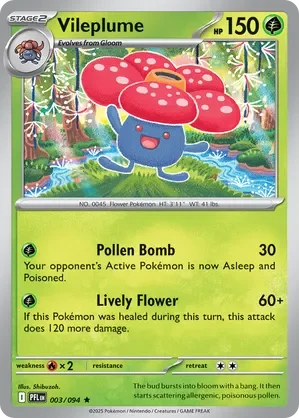
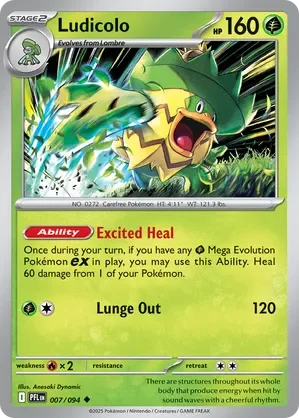
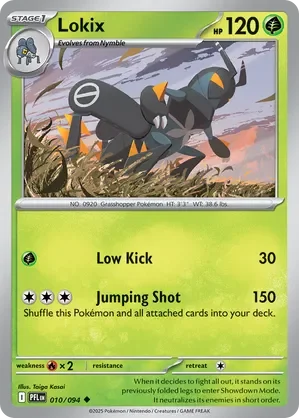
Attackers are the Pokémon you plan to win the game with.
They usually:
Sit in the Active Spot
Have attacks you use almost every turn
Get most of your Energy attachments
Beginner tip:
You usually only need 1–2 main attackers per deck. Too many attackers make your deck unfocused.
In Phantasmal Flames, attackers are often Evolved Pokémon, not Basics.
Support Pokémon
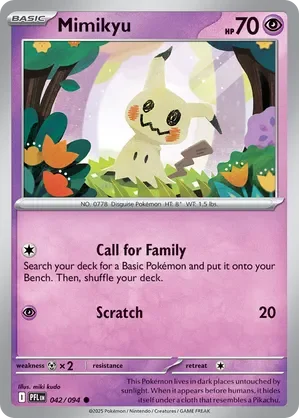
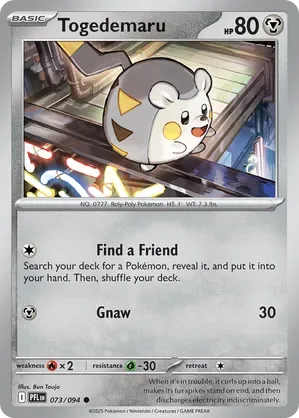
Support Pokémon help your deck function, but rarely attack.
They might:
Help you draw cards
Search your deck
Boost damage or survivability
These Pokémon:
Usually stay on the Bench
Are just as crucial as attackers
Should be protected when possible
Losing support Pokémon early can slow your entire deck down.
Bench Sitters
Bench sitters are Pokémon that exist for one specific reason.
They might:
Enable an effect while in play
Be required to evolve another Pokémon
Serve as a backup later
They often:
Never attack at all
Have low HP
Are only played in small numbers
Beginner mistake: treating every Pokémon as an attacker. In reality, many are just pieces of the engine.
Setup Basics vs Late-Game Attackers
Not all Basics are equal.
Setup Basics
Played on turn 1
Exist to evolve
Often weak but necessary
Late-Game Attackers
May start as Basics
Don't need to evolve
Are better saved for later turns
Learning when to bench a Pokémon is just as important as learning which Pokémon to play.
Evolution Lines Explained
How Many Copies You Need
A simple beginner rule:
3–4 copies of your main Basic
2–3 copies of its Evolution(s)
1–2 copies of secondary lines
More copies mean:
More consistency
Fewer games where you "just don't draw it."
Why Stage 2 Pokémon Are Risky
Stage 2 Pokémon are powerful—but risky for beginners.
They require:
Three separate cards
Multiple turns
Protection during setup
Common problems:
Being Knocked Out before evolving
Drawing the Stage 2 with no Basic
Running out of Bench space
They're best used when:
They are your clear win condition
The rest of the deck supports them
When a Stage 1 Is "Good Enough"
Stage 1 Pokémon are often the sweet spot for beginners:
Easier to set up
Strong enough to win games
Less deck space required
If a Stage 1:
Attacks efficiently
Has decent HP
Fits your deck's plan
…it may be better than forcing a Stage 2 just because it looks stronger.
Pokémon ex Basics
Pokémon ex are flashy, powerful, and tempting—but they come with real risks.
Why Giving Up 2 Prizes Matters
When a Pokémon ex is Knocked Out:
Your opponent takes 2 Prize cards
Losing one too early can decide the game
This means:
You must choose when to expose them
You can't treat them as disposable attackers
When to Attack with Pokémon ex
Pokémon ex are best used when:
Your board is already set up
You can attack multiple turns in a row
You can force your opponent into awkward Prize trades
They often shine in the mid-to-late game, not on turn one.
When Not to Rely on Pokémon ex
Avoid relying on Pokémon ex when:
Your deck has no backup attackers
You're behind and desperate
Your opponent can easily knock them out in one hit
A strong beginner deck treats Pokémon ex as:
A powerful option, not the entire strategy.
Next, we'll move into Trainer cards and explain why even the strongest Pokémon in Phantasmal Flames can fail without the proper support behind them.
PART IV — TRAINER CARDS
4A. Beginner Trainer Breakdown
If Pokémon are the engine of your deck, Trainers are the oil that keeps it running. Many new players underestimate Trainers because they don't deal damage, but in Phantasmal Flames, Trainers are often the difference between a deck that works and one that stalls out completely.
What Trainers Actually Do
Trainer cards exist to make your deck consistent.
They help you:
Draw more cards
Find the Pokémon you need
Move Pokémon in and out of the Active Spot
Control the pace of the game
A deck full of strong Pokémon will still lose if it can't:
Set up on time
Recover from knockouts
Adapt to what the opponent is doing
Trainers solve those problems.
The Difference Between Items, Supporters, and Stadiums
Understanding Trainer types makes deckbuilding much easier.
Items
Can be played as many times as you want per turn
Usually provides quick effects like searching or switching
Make your early turns much smoother
Items are especially important in Evolution decks, where missing one piece can cost multiple turns.
Supporters
Only one per turn
Usually provides powerful draw or search effects
Shape how your turn plays out
Because you can only play one, choosing the right Supporter each turn is a key skill.
Stadiums
Stay in play and affect both players
Can be replaced by another Stadium
Change how the game feels over multiple turns
Stadiums are less common in beginner decks, but even one good Stadium can make your strategy more reliable.
Why Phantasmal Flames Feels "Trainer-Light"
Compared to many modern expansions, Phantasmal Flames includes:
Very few draw Supporters
Limited search options
Almost no universal "staple" Trainers
This is intentional—the set is designed around Pokémon interactions, not self-contained engines. For beginners, though, it can feel frustrating when:
You don't draw Evolutions
Your hand runs out of options
Your deck feels inconsistent
That's not a player mistake—it's a set design choice.
Why Outside Staples Are Mandatory
To make Phantasmal Flames playable, especially for beginners, you must bring in Trainers from other sets or products.
Most decks will need:
Reliable draw Supporters
Pokémon search Items
Switching cards to handle heavy retreat costs
Think of it this way:
Phantasmal Flames provides the strategy, but other sets provide the tools.
Once you add those tools, the Pokémon in this set start to shine.
Beginner Deck-Building Rule (Read This First)
Your deck will not work using only Phantasmal Flames Trainers.
This isn't a failure—it's normal. Competitive and casual decks alike are built by mixing sets. Learning to do that early is one of the most essential skills in the Pokémon TCG.
In the next section, we'll look at Energy cards and resource management, and explain why Energy counts matter even more in slower, Evolution-focused decks like these.
PART V — ENERGY & RESOURCE MANAGEMENT
5A. Beginner Energy Guide
Energy cards don't look exciting, but they quietly decide most games—especially in slower, Evolution-focused sets like Phantasmal Flames. Many beginner decks fail not because their Pokémon are weak, but because they can't attack on time.
This section will help you avoid that problem.
How Much Energy a Deck Needs
For beginners, a safe starting point is:
14–18 Energy cards in a 60-card deck
Why so many?
Evolution decks take longer to get going
You need to attach Energy every turn
Missed Energy attachments delay attacks and lose momentum
As you gain experience, Energy counts often go down—but early on, having too much Energy is far better than too little.
Why Running Too Little Energy Fails
New players often cut Energy to fit more Pokémon or Trainers. This usually backfires.
Too little Energy leads to:
Attackers stuck in the Active Spot doing nothing
Powerful Pokémon that never attack
Losing games despite having a strong board
A simple truth:
A Pokémon with no Energy is just a liability.
In Phantasmal Flames, many attacks are designed to be powered up over multiple turns, so missing even one attachment can cost you the entire game plan.
Single-Type vs Multi-Type Decks
Single-Type Decks (Recommended for Beginners)
Use only one type of Energy
More consistent
Easier to pilot and fix mistakes
Most Phantasmal Flames beginner decks should start here—especially Grass-focused builds.
Multi-Type Decks
Use two or more Energy types
More flexible, but less consistent
Require careful planning
Multi-type decks are best saved for later, once you're comfortable managing:
Energy attachments
Search priorities
Backup attackers
If you're asking, "Should I play two Energy types?" the beginner answer is usually no.
Basic Energy Mistakes New Players Make
Avoid these common traps:
Too few Energy cards: The most common beginner mistake—and the most punishing.
Attaching Energy to the wrong Pokémon: Powering a Pokémon that never attacks wastes turns.
Splitting Energy across too many attackers: Focus on one main attacker at a time.
Ignoring retreat costs: Heavy retreat Pokémon can trap Energy if you're not careful.
Saving Energy instead of attaching it: In most cases, attaching Energy every turn is correct—even if you're unsure.
Beginner Energy Rule of Thumb
If you miss Energy attachments in multiple games, add more Energy—don't argue with the deck.
Once your deck consistently attacks on time, then you can start fine-tuning counts.
Next, we'll look at archetypes enabled by Phantasmal Flames and show how different Energy choices shape how those decks actually win games.
PART VI — ARCHETYPES ENABLED BY PHANTASMAL FLAMES
6A. Beginner Archetypes (Learning-Friendly)
Phantasmal Flames is not a "one-deck" set. Instead, it teaches beginners through a few clear, repeatable archetypes that focus on fundamentals like setup, sequencing, and win conditions. The archetypes below are forgiving, educational, and scalable as players improve.
Grass Evolution Decks
Win Condition Explained
Grass Evolution decks aim to build strong evolved Pokémon that can stay in play, attack turn after turn, and slowly overwhelm the opponent. You win by stabilizing the board and outlasting faster decks.
Ideal Game Flow
Early game:
Bench multiple Grass Basics
Begin at least one Evolution line
Attach Energy every turn
Mid-game:
Evolve into your main attacker
Start applying steady pressure
Protect your Bench and setup pieces
Late game:
Maintain one powered attacker at all times
Win through consistency rather than speed
Strengths & Weaknesses
Strengths
Teaches Evolution timing
Strong once established
Forgiving if you misplay early
Weaknesses
Slow starts
Vulnerable to early aggression
Requires patience and planning
Big HP Pokémon ex Decks
Win Condition Explained
These decks focus on one or two high-HP Pokémon ex that are hard to Knock Out. You win by forcing your opponent to spend multiple turns dealing with a single threat.
Ideal Game Flow
Early game:
Set up one main Pokémon ex
Attach Energy carefully
Avoid unnecessary risks
Mid-game:
Begin attacking with your ex
Absorb hits while trading Prizes
Keep a backup attacker ready
Late game:
Finish the game with sustained attacks
Prevent your opponent from making efficient Prize trades
Strengths & Weaknesses
Strengths
Simple game plan
High survivability
Easy to understand Prize trading
Weaknesses
Giving up 2 Prizes is risky
Weak to strong counters
Can lose quickly if the main attacker falls early
Simple Two-Attacker Builds
Win Condition Explained
These decks revolve around one main attacker and one backup attacker. You win by keeping pressure on the opponent without overcomplicating your board.
Ideal Game Flow
Early game:
Set up your main attacker
Prepare the backup on the Bench
Mid-game:
Attack consistently with the main Pokémon
Transition smoothly if it's Knocked Out
Late game:
Close out the game with whichever attacker remains powered
Strengths & Weaknesses
Strengths
Very beginner-friendly
Clear decisions each turn
Teaches resource management
Weaknesses
Limited flexibility
Fewer comeback options
Struggles against highly specialized decks
Beginner Archetype Takeaway
If you always know which Pokémon you want attacking next, your deck is doing its job.
These archetypes aren't just ways to win—they're learning tools. Mastering them in Phantasmal Flames builds a foundation that carries directly into more advanced competitive decks later on.
PART VII — DECK CONSTRUCTION
7A. Beginner Deckbuilding Guide
Deckbuilding is where many new players get overwhelmed—but it doesn't have to be complicated. With Phantasmal Flames, a simple, structured approach works far better than trying to be clever too early.
This section gives you a safe foundation to build from and explains why it works.
Skeleton Decks: 20 Pokémon / 20 Trainers / 20 Energy
For beginners, this classic split is one of the most reliable ways to start:
20 Pokémon → ensures you see Basics and Evolutions
20 Trainers → gives your deck consistency and recovery
20 Energy → guarantees you can attack on time
Why This Works Early
You'll rarely get stuck without Pokémon
You'll attach Energy almost every turn
You'll draw playable hands more often
This ratio is not "optimal" for tournaments—but it's excellent for learning. Once your deck works consistently, you can start trimming Energy and Pokémon later.
Evolution Math Explained Simply
Evolution decks fail most often because players don't include enough copies of the cards they need.
Here's a beginner-friendly rule:
Main Basic Pokémon: 3–4 copies
Main Evolution (Stage 1 or Stage 2): 2–3 copies
Secondary lines: 1–2 copies
Why this matters:
If you only play 1 copy, you won't see it often
If your Basic is Knocked Out, backups matter
More copies = fewer dead games
Another simple rule:
If your deck is built around a Pokémon, you should expect to draw it every game.
Common Beginner Errors (and How to Fix Them)
Too Many Evolution Lines
It's tempting to include every cool Pokémon you like—but this makes decks fall apart.
Problems this causes:
You never finish evolving anything
Your Bench fills with half-built Pokémon
Your deck has no clear win condition
Fix:
Pick one main Evolution line, maybe one small backup line, and cut the rest.
Not Enough Draw
Many beginner decks lose because they stop drawing cards.
Warning signs:
Empty hands
Top-decking every turn
Missing Evolutions even though they're in your deck
Fix:
Add more draw Supporters and Trainer cards that help you see more of your deck. Pokémon can't win games if you never draw them.
No Switching Cards
Heavy retreat costs are typical in Phantasmal Flames, and beginners often get trapped.
What goes wrong:
The wrong Pokémon is Active
Energy is stuck on a useless Pokémon
You lose turns doing nothing
Fix:
Always include some way to switch Pokémon, even if it feels unnecessary. You'll be glad it's there when things go wrong.
Beginner Deckbuilding Takeaway
A deck that does one thing reliably will beat a deck that tries to do everything poorly.
Start simple. Make your deck work first. Once it runs smoothly, then start experimenting. That mindset will save you dozens of frustrating games—and make Phantasmal Flames much more fun to play.
PART VIII — MATCHUPS & GAMEPLAY
8A. Beginner Matchup Basics
Understanding matchups is one of the most complex skills for new players—but you don't need advanced meta knowledge to start playing better. With Phantasmal Flames, most beginner games come down to recognizing speed differences and knowing what you're actually trying to win with.
Fast Decks vs Slow Decks
Most matchups can be simplified into one question:
Who is faster?
Fast decks
Attack early (turn 1–2)
Use strong Basic Pokémon
Try to win before you fully set up
Slow decks (most Phantasmal Flames decks)
Spend early turns evolving
Become stronger over time
Win by stabilizing and outlasting
If you're playing a slower deck:
Expect to take damage early
Don't panic if you fall behind in Prize cards
Focus on finishing your setup safely
A common beginner mistake is trying to "race" a fast deck. With Phantasmal Flames, you usually win by surviving, not by matching speed.
When You Are "Behind"
Being "behind" doesn't always mean you're losing.
You are not necessarily losing if:
You're down 1–2 Prize cards
Your opponent has fewer Pokémon on the Bench
Your main attacker is almost ready
You are in trouble if:
You can't attack next turn
Your setup Pokémon are being Knocked Out
You don't know what your next attacker will be
Beginner tip:
Board position matters more than Prize count early in the game.
If your board is improving each turn, you're still in the game—even if the Prize cards say otherwise.
How to Identify Your Win Condition Mid-Game
A win condition is how you plan to take your remaining Prize cards.
Mid-game, ask yourself three simple questions:
Which Pokémon do I want attacking right now?
Which Pokémon do I want attacking after that one is Knocked Out?
How many Prize cards can those Pokémon realistically take?
Your win condition might be:
One strong evolved Pokémon staying in play
A Pokémon ex trading Prizes efficiently
Two attackers rotating in and out
If you can clearly answer those questions, your decisions become easier:
You know where to attach Energy
You know what to protect on your Bench
You know when to retreat or switch
Beginner Matchup Takeaway
You don't win Phantasmal Flames games by panicking—you win by letting your deck do what it's built to do.
Recognize whether the game favors speed or patience, track your board instead of the scoreboard, and always know which Pokémon is supposed to win the game for you.
PART IX — GROWTH & UPGRADE PATHS
9A. Beginner: Improving Your Deck Over Time
Once your Phantasmal Flames deck can play full games without stalling, the next step isn't rebuilding everything—it's upgrading with purpose. Improving slowly helps you learn why decks work, not just copy lists.
What to Upgrade First
When upgrading a beginner deck, always improve consistency before power.
Upgrade order (most important → least important):
Draw Trainers – Seeing more cards fixes more problems than adding new Pokémon
Search cards – Finding the right Pokémon matters more than owning many
Switching options – Prevents games from being lost to bad positioning
Pokémon counts – Only after the deck runs smoothly
If your deck:
Misses Evolutions → add search
Has empty hands → add draw
Gets stuck Active → add switching
Adding a stronger Pokémon before fixing these issues usually makes the deck worse, not better.
Cards That Teach Good Habits
Some cards are especially valuable for beginners because they reward correct play.
Good habit–building cards:
Draw Supporters that require timing and choice
Search cards that make you plan Evolutions ahead
Pokémon that reward steady Energy attachments
Effects that punish overextending your Bench
These cards teach:
Planning multiple turns ahead
Managing resources instead of dumping your hand
Thinking about your next attacker, not just the current one
If a card only works when everything goes perfectly, it's usually not teaching you good fundamentals.
When to Abandon a Pet Deck
Every player has a "pet deck"—the one they love, even when it keeps losing. Knowing when to move on is part of improving.
It may be time to abandon (or shelve) a deck if:
You've upgraded consistency and it still can't function
It loses the same way every game
It can't survive long enough to execute its plan
This doesn't mean the deck is bad—or that you failed. It means:
The deck has taught you what it can, and it's time to learn something new.
Many strong players improve fastest by:
Building a new deck
Applying lessons from the old one
Returning later with better skills
Beginner Improvement Takeaway
Don't chase wins—chase better games.
If your deck sets up more often, makes clearer decisions, and gives you meaningful choices each turn, you're improving—even before the win rate catches up.
PART X — FINAL RECOMMENDATIONS
10A. Beginner Verdict
Phantasmal Flames isn't the easiest way to learn the Pokémon TCG—but for the right kind of beginner, it can be one of the most rewarding.
Here's how to tell if it's the right starting point for you.
Who Should Start with Phantasmal Flames
This set is an excellent choice for beginners who:
Enjoy planning ahead instead of rushing attacks
Like Evolution Pokémon and watching a board develop
Don't mind slower games with longer setups
Want to learn how "real" Pokémon TCG decks are built
If you're curious about:
How Evolution decks actually function
Why Trainers matter so much
How games are won beyond raw damage
…Phantasmal Flames is an excellent teaching tool.
Who Should Avoid It Early
Phantasmal Flames may be frustrating early on for players who:
Want fast, immediate action
Prefer simple, aggressive decks
Are still learning basic turn structure
Don't have access to staple Trainers from other sets
If your goal is quick wins or instant power, this set can feel slow and unforgiving without the proper support.
That doesn't mean you'll never enjoy it—just that it's often better as a second or third step, not your very first one.
Best Learning Outcomes from the Set
For beginners who stick with it, Phantasmal Flames teaches some of the most essential skills in the Pokémon TCG:
Patience — learning when not to attack
Planning — thinking multiple turns ahead
Evolution sequencing — building a board deliberately
Deck construction fundamentals — balancing Pokémon, Trainers, and Energy
Win condition awareness — knowing how your deck actually wins
These lessons transfer directly into more advanced decks and competitive play later on.
Beginner Final Takeaway
Phantasmal Flames doesn't teach you how to win quickly—it teaches you how to win correctly.
If you're willing to slow down, learn fundamentals, and build thoughtfully, this set can turn a new player into a confident one faster than almost any plug-and-play alternative.
